Sigma's DP2s: not your average camera
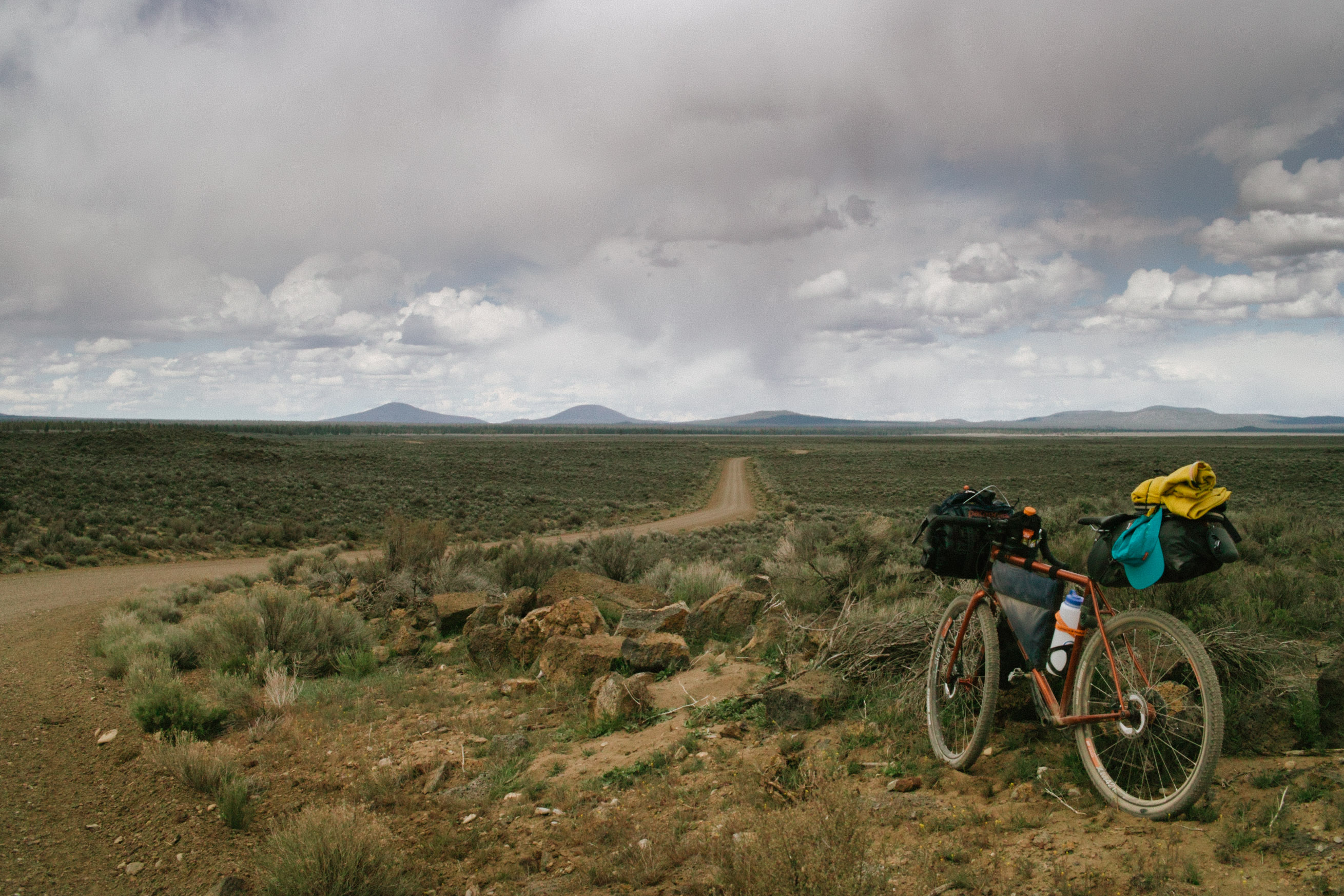
The DP2s is a small fixed-lens digital camera that Sigma launched in 2010. It's my go-to digital camera for daily snapshots, and it's surprisingly robust enough to survive several bikepacking trips. Nobody looks twice at it, which is part of why I take it everywhere. I paid about $250 for it - probably too much for what it can do on paper. But the images it makes are why it's one of my favorite cameras. Besides the distinctive image quality, its unique sensor sets it apart from other digital cameras.

Most cameras use what's called a Bayer filter sensor, essentially a single grid of pixels where each pixel captures one color: red, green, or blue, in a checkerboard pattern.
Twice as many of those pixels capture green as red or blue, because the human eye is most sensitive to green and the engineers who designed this approach in the 1970s were trying to squeeze the visible color spectrum into an electronic signal as efficiently as possible. Software fills in the missing two-thirds at every pixel by looking at the neighbors and guessing.
Additionally, there's often a physical filter sitting in front of the sensor, a thin layer that softens the image very slightly before it ever hits the pixels, to prevent the checkerboard from producing moiré; a shimmering, often colored pattern that shows up on fine repeated textures like fabric or distant brick walls. The whole design is a series of tradeoffs to make a full-color image out of pixels that can each only see one color at a time.
It works well, which is why almost every digital camera does it this way. The downsides are pretty subtle on modern high-resolution cameras. But often fine details can disappear and colors can come out looking a little bland and inaccurate.


The sensor in the DP2s is significantly different. Its Foveon X3 sensor stacks three layers vertically, and every pixel records all three colors at once. It doesn't have a checkerboard, it doesn't do any interpolation, and there's no anti-aliasing filter because it doesn't need one. This means, at least in theory, that pictures taken with the DP2s should have much better color accuracy and more fine detail than cameras with Bayer sensors.
When I got my first used copy around 2015, I immediately noticed the difference. Reds and blues popped without feeling pushed or boosted, reminiscent of slide film. The colors out of the camera aren't necessarily accurate, just juicier. In contrast, skin tones are rendered sensitively, soft but not diffused. With enough light and correct exposure the DP2s presents people in a very flattering way. Something about the lens-and-sensor combo softens blemishes, settles wrinkles, and smooths out the blotchy patches that a lot of modern cameras can render with forensic accuracy.
Speaking of the lens, it's a fixed 41mm-equivalent f/2.8 built into the camera body. It isn't very clinical, and I think it perfectly matches the sensor's character to help produce the camera's signature charm. Even though Lightroom offers the option of enabling lens correction I don't use it that often.
But the Foveon sensor does have tradeoffs. It needs a lot of light to reach into the deepest color layer and the number of light-sensitive receptors that cover the sensor is relatively low. This means ISO range is very limited, and even moderately sized prints could appear soft.

While the DP2s is a point-and-shoot it benefits from a slow and measured approach. I generally shoot static or slow moving subjects since accurate focusing can be difficult with moving objects. I use the spot meter to ensure my highlights don't blow out and the center focus point just for speed. So it's a camera you need to be mindful about. You can't just spray and pray like a Ricoh GR. Taking the time to compose a shot will help you reduce the chances of poor exposure like shooting a scene with too much dynamic range. If I want to shoot something that requires more dynamic range than I know the sensor can handle, I use my feet to reframe or I just skip the shot. So it can feel a lot like shooting film in that regard.
There is a small built-in flash and it works well enough for fill or if you want that sexy aughts look. Fortunately the sensor really helps cut down the effects of the harsh light. Flash images remind me of shots I've seen from the Contax T2. While the flash is helpful, I'm not a big fan of the style, so I find that using a slower shutter and holding still works well when dealing with the camera's low ISO requirements. Pixel peepers beware!

While it's a fun little camera, there's a lot not to like about it.
I've read some reviews that describe the shape of the DP2s as utilitarian. That may be true in an aesthetic sense, but any camera shaped like a pack of cigarettes is going to have ergonomic issues. Holding the camera while changing aperture or manually focusing can be a chore. I remedied this somewhat by installing a small rubber grip I found on eBay, which gives my fingers something to hold on to.
The rear buttons are pretty mushy and the LCD is the definition of low-res. In bright sun it's basically unusable for accurate focusing and unfortunately there's no viewfinder as a back-up. The manual focus controls are two buttons articulated with your thumb rather than a ring around the lens. In practice this means you're mashing those mushy buttons a lot if you want to avoid autofocus, which makes sense sometimes because it can endlessly hunt in anything but ideal conditions. The boot time is also very slow, so slow that you'll miss a lot of shots.

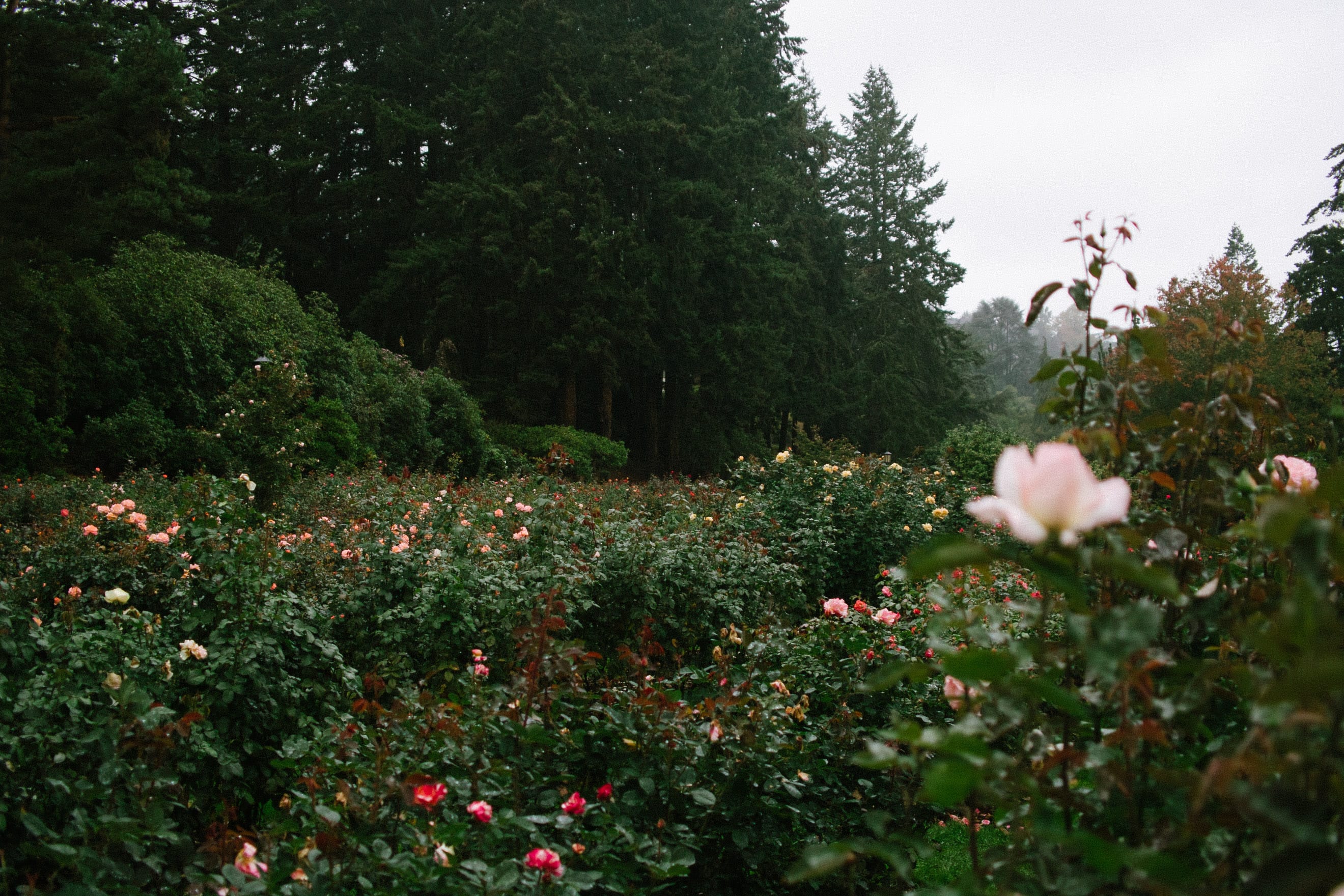
Higher ISO is an absolute no-go. I think 400 is the sweet spot, but you should probably be metering a stop below if you want to avoid noise and the odd color cast. I've used ISO 800 a few times out of necessity, but mostly to my regret as the images can appear grainy and posterized if you try to raise shadows or lower highlights in your editing software.
In addition, the camera has very limited dynamic range and, due to the sensors design, it's very easy to blow out a single color channel; in my experience it's usually the red channel that goes first. So it's always a good idea to watch your highlights.
Even though I treat the camera as a fun point-and-shoot, I've had to develop muscle memory for how and where to expose, often resulting in a shot being skipped. If you're used to shooting film it's a similar limitation.
And finally, each time I turn it on, the lens motor whirrs out of the body and I hold my breath until it fully extends. I've owned a couple of these since 2010, including a DP1s, and they've all succumbed to motor issues eventually. When I grab my current DP2s I understand that it's very much mortal, and every time I turn it on it reminds me.
It was a pretty bad user experience in 2010, and it's a really bad experience in 2026. Still, if you're going for image quality, this camera really punches above its weight.

The strange thing about Sigma's Foveon line is that the sensor was pretty innovative for its time, and most of what made it interesting got engineered out of every Sigma camera that came after.
I sold my original DP2s once and bought a Merrill, basically an updated body and sensor with a non-motorized lens, better autofocus, and slightly better ergonomics. The files had their own kind of character, but to my eye were a bit on the clinical side. The Merrill lens is incredibly sharp, but I think the camera ultimately suffers from these enhancements.
The other problem with the Merrill was the workflow. At the time, there really wasn't any way to edit Merrill raw files outside Sigma's much-maligned "Sigma Photo Pro" software. I had to round-trip through Photo Pro to create a TIFF, then bring that into Lightroom for my preset and adjustments. The workflow was just dumb so the Merrill was sold very quickly. G.A.S. is real.
I feel like each generation of Sigma cameras has chased something the previous one didn't have, and the things I liked about the DP2s have been steadily traded away for sharpness, resolution, and minimalism. The DP2 Quattro just looks off-putting. Their newest Bayer sensor cameras, the fp and bf, both have bodies so ridiculously small that even compact lenses look oversized.
I know Sigma is currently working on a successor to the Foveon sensor, but I doubt it will appeal to me. Reading interviews with Sigma's CEO, I get the feeling that even if they succeed in producing an updated sensor, they'll miss the point of what separates these cameras from the Canons and Sonys of the world: the interesting character and analog-like organic weight to the images.
Not that anyone has asked me, but if I were in charge of designing a modern Foveon camera, I'd keep the lower-resolution sensor of the DP2s (while we're at it, let's make it full-frame) and add modern autofocus, a viewfinder, and a usable ISO 1600. Maybe package it into a slightly larger and more ergonomic Merrill body so I wouldn't have to worry about that underpowered lens motor. Alternatively, this sensor in a manual rangefinder body, something like the Epson R-D1 or Leica M8, would be a dream. None of this is going to happen. Sigma isn't going back, and nobody else is going forward into territory Sigma already abandoned.

And that's a lot of words for an ode to one of my favorite cameras, a 16-year-old discontinued point-and-shoot. While I wish another interesting camera were on its way to replace it, at some point my last DP2s will break and that'll be that. Until then it lives in my jacket pocket.